Duration
12 DAYS
Group Type
PRIVATE
Language
en, es
Confirmation
Instant
<p>Today we will meet or pick you up in Cusco, nestled among the energy-infused mountains of the Andes. We will transfer straight to the lower altitudes, warmer climate and peaceful environment of the Sacred Valley.</p> <p>Along the way, we will visit Awanakancha, a community-driven project that introduces us to the South American camelids and traditional weaving techniques of the area.</p> <p>After arriving at your hotel in Pisac, you will participate in an authentic Andean Blessing to Pachamama (the Earth Mother) ministered by an Andean Priest. This ceremony invokes the help and energy of the Mountain Gods and Pachamama (the Apus and the Earth Mother, respectively) for the health, wellbeing, and happiness of the participants.</p> <p>At the same time, the participants show appreciation for life and their blessings. The rest of the day will be free for you to relax and acclimatize.</p>
<p>To begin, the shaman must start with a Flower Cleansing Ceremony, done with sage and yellow flowers. Sage is common around houses and businesses here in the Andes, often found by the front door, and is used to ward off bad spirits.</p> <p>In our ceremony, it is used to clean the negative energies from your body. The shaman creates a cover of sage over you while saying a prayer in his native Quechua language.</p> <p>The next step is to cover your body with yellow flowers for protection. Many say they can feel the strong energy as an after effect of the ceremony. It is quite a moving experience. Next is the Coca Leaf Reading Ceremony.</p> <p>The shaman will start by asking questions regarding your home life, health, family, friends and occupation. The shaman will say a prayer to the mountains with his satchel of coca leaves held high above his head. He next places them down on a flat surface and gently opens the fabric. The placement of the leaves is his direct insight into your past, present, and future.</p> <p>This is a long-standing practice in Andean culture and a one-of-a-kind experience. The final and most important ceremony is Offering to Pachamama. Pachamama is the Andean word for Mother Earth. We give thanks to Pachamama for our crops and everything we have by putting our intentions back into the earth below.</p> <p>This is done through the prayer of the shaman and his pouch of sacred Andean offerings. All are symbolic of aspects such as protection of travel and relationships, occupational success, and many more. The shaman, with the help of the translator, will go over each offering and its significance in Andean culture before wrapping them all up to go into the bonfire. Afterwards, we will return to Pisac to spend the night.</p>
No reviews yet
Be the first to share your experience.
From
per person
Adults
Age 13+
Children
Age 3-12
Infants
Age 0-2
You Might Also Like
Istanbul, Turkey
From

Istanbul, Turkey
From

Istanbul, Turkey
From

Istanbul, Turkey
From
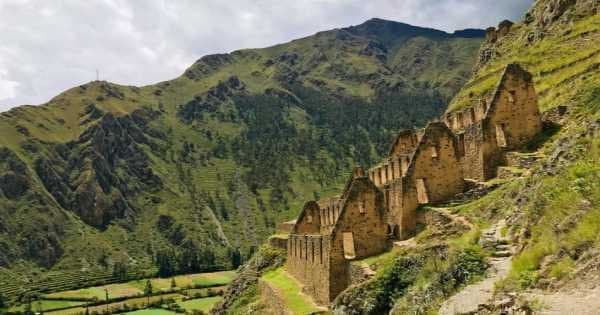
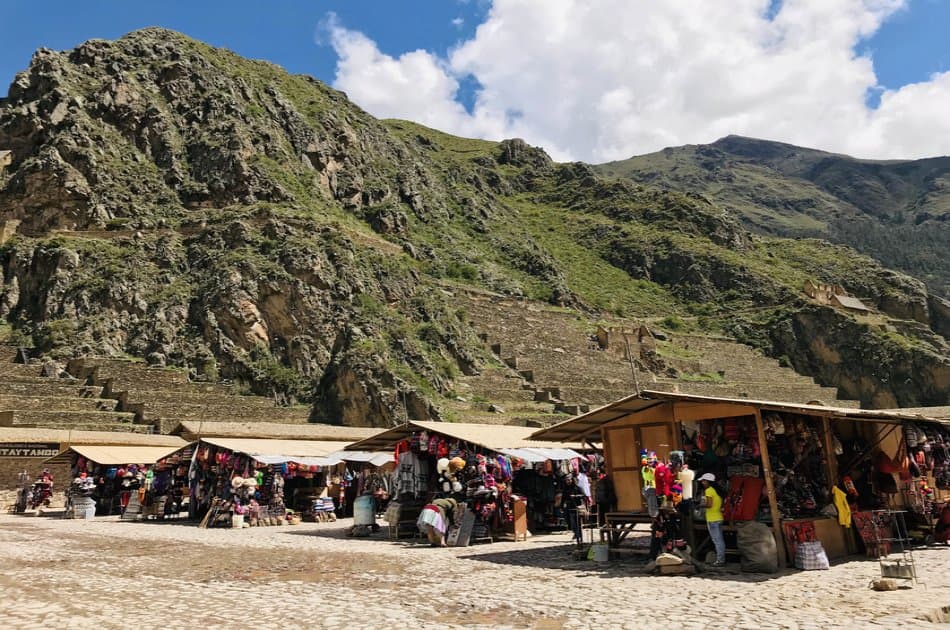
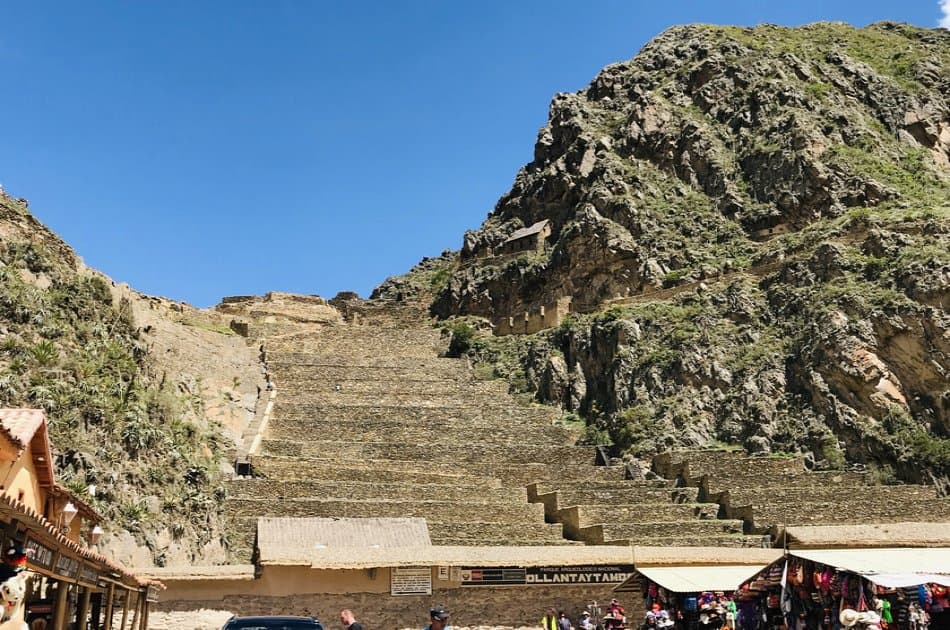
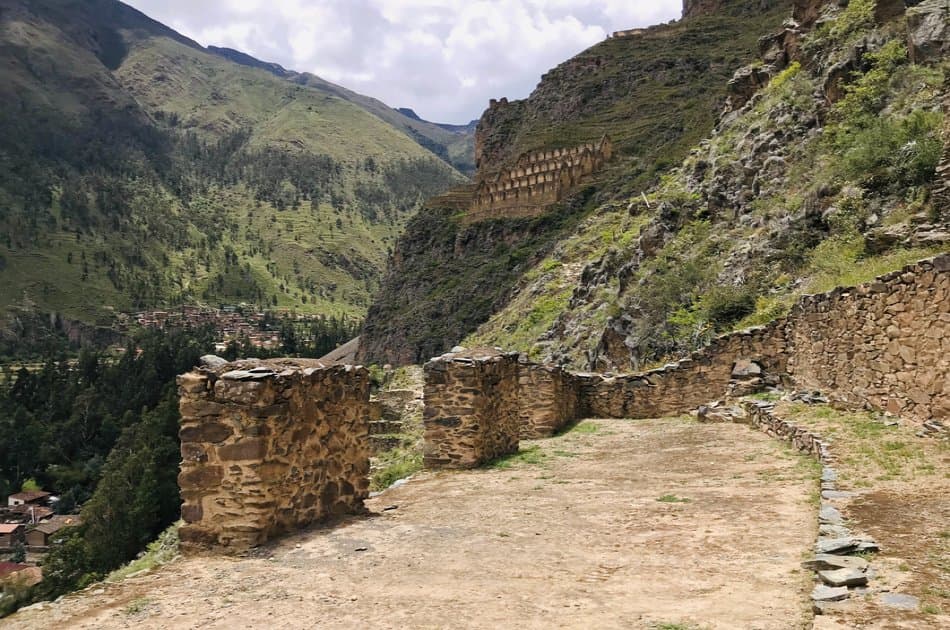
<p>This morning we will visit Pisac, a spectacular Inca site located along the length of a ridgeline high above the village of the same name. Here, we will learn about the Intiwatana (Sun Temple) and its religious significance before continuing through the picturesque Sacred Valley to tour the ruins of Ollantaytambo.</p> <p>Ollantaytambo is the only continuously inhabited Inca town; it is still laid out on its original Inca street plan. Our tour will take us up to its steep terraces to the enigmatic, unfinished temple and magnificent views at the top.</p> <p>We will explore the lower temple as well, with its many baths and water channels. Before dinner, you will have the opportunity to wander Ollantaytambo’s cobblestone streets lined with water channels that have been running since the time of the Incas.</p> <p><strong>Please note:</strong> The ruins of Pisac and Ollantaytambo require purchasing an additional entrance ticket (see below). This same ticket can be used for the ruins of Moray on Day 4.</p>
<p>In the midst of endless agricultural fields that lie just above the Sacred Valley is Moray. This is a lesser-known Inca site whose original use is still debated. There are some who believe that it was a sacred site and representative of the female womb; however, most believe that it was an Inca experimental agricultural centre.</p> <p>Formed by concentric, circular terraces, there can be a difference in temperature of up to 15°C between the upper and lower terraces, creating various environments and allowing for the growth of species from different parts of the empire. Regardless of its original use, it is a site full of energy, perfect for our yoga practice. From here it is a short ride to the Salineras salt pools near Maras.</p> <p>In existence since pre-Inca times, these small pools are fed by a natural spring and left to dry until it is possible to harvest the salt. Each pool is owned by a family from the area and provides a renewable source of income for the region.</p> <p>Walkthrough this surreal white landscape, we’ll take advantage of the light and colours for some incredible photos. Note that the Salineras salt pools require an additional entrance ticket of S/.10 which can be purchased at the entrance.</p> <p>Afterwards, we will return to Ollantaytambo to catch the train to Aguas Calientes. Here, we will spend the night before getting up early the next morning for Machu Picchu.</p>
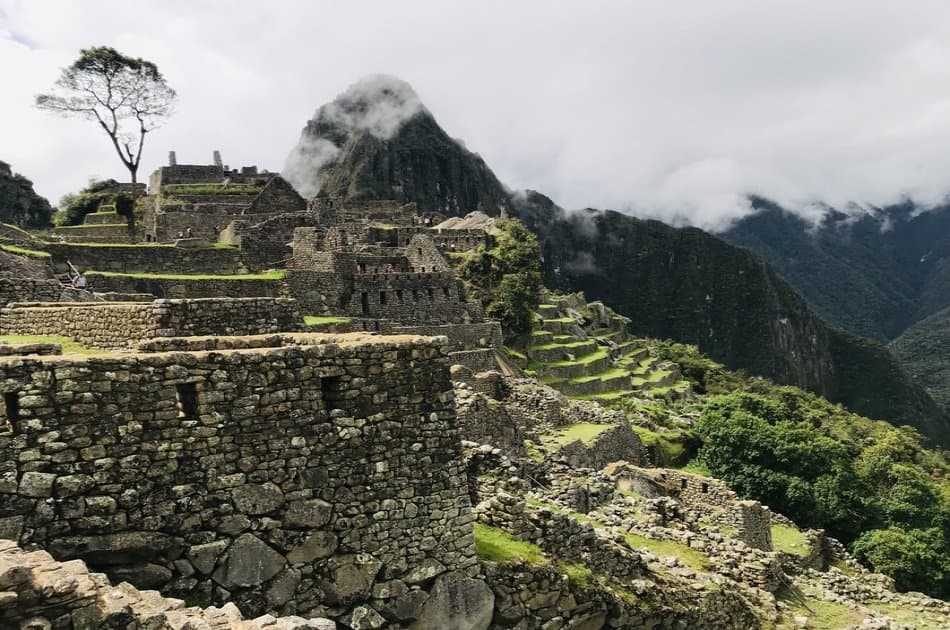
<p>We will get up early to catch one of the first buses up to Machu Picchu and in time to watch the sunrise over the mountains. After enjoying the views, we will have a two-hour tour of the Inca citadel, visiting the principal sites.</p> <p>After the tour, we recommend the following activities:</p> <p>• Climbing Wayna Picchu and visiting the Temple of the Moon (requires an additional pass and must be reserved at time of booking – see below).</p> <p>• Climbing Machu Picchu Mountain (requires an additional pass and must be reserved at time of booking – see below).</p> <p>• Hiking to the Sun Gate, where the first rays of sunshine on the winter solstice.</p> <p>• Visiting the Inca Bridge, where you can marvel at the incredible engineering skills and ingenuity of the Incas.</p> <p>• Sitting on the terraces below the Temple of the Condor and taking in the energy of the site.</p> <p>• Walking through the site again, ducking into hidden corners and little-visited rooms to refine your own theory about Machu Picchu. In the afternoon we will return to Aguas Calientes to catch the train to return to Cusco and your hotel.</p>
<p>This day is for you to relax in preparation for tomorrow’s journey to Ausangate and enjoy the city of Cusco.</p> <p>There are many places for massages and souvenir hunting, plus museums and Inca temples to visit. We can make recommendations to suit your tastes.</p>
<p>We’ll leave Cusco at 7 am in our private car along the Cusco-Puerto Maldonado road and head to the town of Tinki (3,800m/12,464ft), first stopping in Urcos to visit the beautiful lake of the same name.</p> <p>Our second detour is the agricultural and herding community of Cattca, which has spectacular views of the region. We’ll next pass through Ocongate, capital of the district with the same name and only a half-hour from Tinki.</p> <p>Finally, we arrive in Pacchanta, a small community with attractive hot springs for us to bathe and relax in after our 6-hour drive. We’ll have lunch and set up camp here, enjoying the fabulous views of the snow-capped local peaks.</p> <p>Post-lunch activities for you to choose from include a small hike, riding Andean horses, or simply relaxing in the hot springs all evening.</p>
<p>We’ll leave Pacchanta and begin an easy climb across the Puna (a dry, high-altitude ecological zone with little vegetation) to arrive 4 hours later at our lunch spot.</p> <p>This spot affords us a view of the beautiful and profoundly sacred mountain Ausangate (6,372m/20,900ft). We’ll arrive at our destination of Lake Uturunco after roughly 4.5 hours of hiking.</p> <p>We’ll camp and have dinner right in front of Ausangate. Our campsite is surrounded by vegetation, beautiful lakes of red, green and turquoise (Puca Cocha, Uturuncu Cocha, and Azul Cocha), and sweeping views of glaciated mountains.</p> <p><strong>Optional:</strong> Horse rental for $70 USD per day.</p>
<p>We’ll keep trekking after breakfast, with a 4-hour descent back to Pacchanta (4,100m/12,464ft).</p> <p>Our route takes us past falcon and “vizcacha” (an Andean rodent similar to rabbits) habitat, with views of the former hunting the latter if we are lucky.</p> <p>Our transport will pick us up in the afternoon for our 8-hour drive to the city of Puno.</p>
<p>Our day begins at 7:45 am with pickup from your hotel. We’ll first visit the floating Uros Islands, which are man-made from local reeds. Our guide will explain the importance of these islands and their role in the ecosystem of Lake Titicaca, the highest navigable lake in the world.</p> <p>Our visit will last around 1.5 hours. Our 7km boat trip to Taquile will take at most 2 hours, during which you can take in the splendid, unobstructed views of the lake and surroundings, including the Cordillera Real (Royal Mountain Range) in Bolivia.</p> <p>A community representative will be waiting to welcome us as our boat docks and will divide us up and introduce us to our host families. During your stay, these families will provide your food and lodging and accompany you as you tour the island.</p> <p>Most people on Taquile are very helpful and well organized. These traits contribute to their high proficiency in weaving and textiles, as recognized and awarded by UNESCO. Of note is that the yarn and weavings are made mostly by men, who begin as young as 8 years old. Life on Taquile continues much as it has for centuries, without many modern changes.</p> <p>Your visit to the community will last around 2 hours, with another hour to enjoy a delicious traditional lunch. The best way to support the community is to buy some of their artisan goods. In this way, the people of Taquile can continue displaying their ancestral culture to future visitors. In the afternoon, our guide can organize a walk to one of the local sacred mountains known as Pacha Tata.</p> <p>This area is known for the friendliness of its people and for being home to the Cantuta flower, the national flower of Peru. The communities here dedicate themselves to cultivating their terraces, raising sheep, and creating artisan textiles and stone carvings.</p> <p>After this visit, we’ll return to our homestay accommodations to spend the night.</p>
<p>We’ll have a tasty breakfast with our homestay families then have the chance for a final walk around the island to see the sunrise. A 2-hour boat ride then brings us back to Puno and on to Aramu Muru, one of the most mystical and energetic places around Lake Titicaca.</p> <p>Aramu Muru – Hayu Marca is an enigmatic, 5m-high altar carved out of a single piece of stone and is surrounded by a very special view; it is a reference point for many spiritually-minded travellers.</p> <p>Our visit here will have a few stops along the way, the first being in Chucuito. This is an appealing little colonial townhome to a curious Inca temple known as “Inca Uyo,” or the fertility temple. The temple contains around 20 sculpted stone phalluses, a sign of having been a ritual centre dedicated to fertility.</p> <p>After this stop, we’ll continue southwards to the Aramu Muru gateway located within some unusual rocky formations, a stone forest of sorts. We’ll take a walk around the site and then arrive at the mystic gateway, a spiritual site for meditation and contemplation.</p> <p>Upon returning to Puno, we’ll have our goodbye dinner and a celebration with music and dance.</p>
Our transport will pick you up from your hotel and take you to the Juliaca airport and your connecting flight to Lima. Our services end here. Happy travels!
Instant confirmation